Construction
Aerospace
Manufacturing
Automotive
Entertainment
Mining
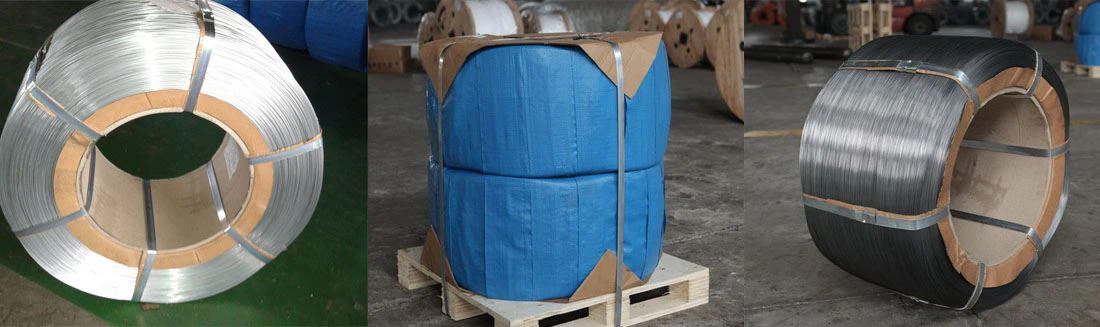
The steel wire is a metallic, cylindrical, and flexible strand that is commonly used to conduct electricity. With it, you can form a wire rope which has even more uses in both private and public sector industries. Some applications you might not even expect. Thanks to this, the uses of steel wire expand greatly.
The applications of steel wire range far and wide. It is used in most industries because having a rope that's more durable than normal fibrous ropes is an incredible advantage. It becomes the better option in terms of safety, longevity, and of course, versatility. And as you can expect, it does the jobs of normal ropes but better. To learn more about steel wire applications in different industries, keep reading below!
Strong wires or strands are most at home on a construction site. Workers have found many ways to put sturdy wires to good use that fibrous ropes might not be able to achieve. They use the wires for lifting heavy things like cement blocks, machinery, or even people in the lift. Steel wires are also used in some parts of the construction itself, serving as extra support. The construction applications of these wires depend heavily on the type of construction being done and on the processes happening on the site, but either way, you will still be able to find a good use for steel wires for construction.
Steel wire is produced by drawing molten steel through a series of dies that reduce its size to the desired diameter and increase its strength. As the steel is drawn through the dies, the steel gets smaller and smaller by the hammering operation of the dies. The wire is then treated again with extreme heat to make it even stronger and slowly cooled. This wire drawing process causes the carbon contained in the steel to crystalize, which results in the wire meeting a defined factor of safety or break strength. From there, a surface treatment may be undertaken, which may include a galvanization process, whereby zinc is applied to the steel to make it corrosion-resistant. If not galvanized steel, other protective layers may be applied to the wire's surface, such as chromium, in stainless steel cable examples, which provides the wire with a layer of added resistance to damaging oxidation. Once the steel wire's strength and integrity have been thoroughly quality inspected and tested, the wire is ready for the stranding process.
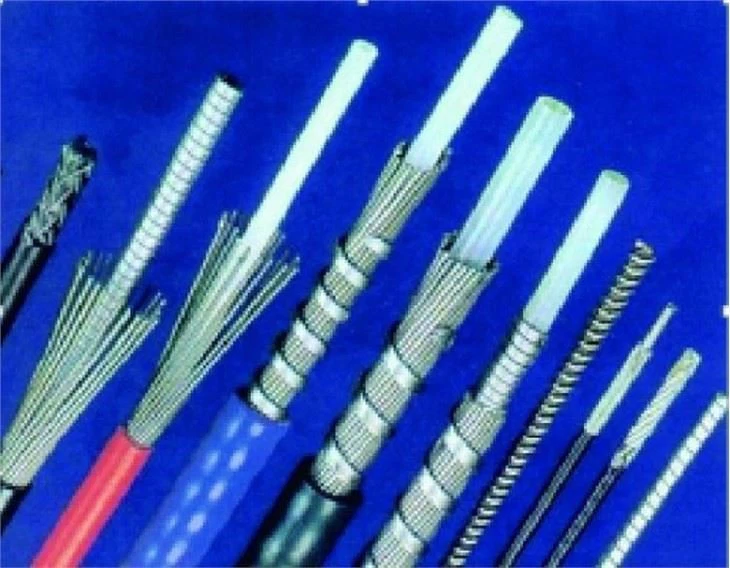
Stranding Wire into Wire Rope & Cable - The newly drawn, treated, and inspected steel wire is fed into what is known as a strander that twists the individual wires in a helical geometry until wire rope, mechanical cable, miniature, or ultrafine cable is produced.
The process of producing steel cable is one that involves determining how many wires a cable requires, in what finished diameter, and under what conditions the cable is expected to perform. Wire counts vary as often as cable diameter.
But cable wire count doesn't only inform more obvious specifications, such as strength and cycle count. Wire count also informs flexibility too. Take, for instance, a 1x7 steel cable construction. This cable configuration comprises seven wires, six of which are helically twisted around what is known as the core wire. While not all cable configurations require a core or center wire, most do. In the case of a 1x7 cable construction, a core center wire is fed into the strander, while six additional wires are fed into surrounding holes in the strander known as guides. The strander possesses a barrel that spins at incredibly high speeds (typically between 1.1k – 5k RPMs). This spinning operation twists the wires together into their familiar helical geometry and hence, a 1x7 cable is produced.
In more complex cable constructions, such as a 3x7, the process is identical as in the 1x7 cable example, except that a completed 1x7 strand is now returned to the stranding machine, and seven more wires are counter-helically stranded around this newly produced center core. Once this second operation is completed, the process is repeated a third time, yielding the operator a 3x7 steel cable construction, which comprises 21 wires.
When selecting the appropriate wire rope cable for your wire rope assemblies or control product, there are a few factors which need to be considered:
Constructural Stretch:
All wire rope cables have spaces between each strand and wire. When a load is applied, the spaces between the wires are reduced and the wire rope cable will grow in length. The amount of the growth is determined by the load applied, length of the cable, and construction of the cable.
Elastic Stretch:
The elastic stretch is an elongation of the cable wires when a load is applied. This can be a significant factor when the yield point of the wire is surpassed. Under this process, each strand of a mechanical cable gets longer as it experiences tension, and this correlates directly to the weight being added or pulled.
Ideally, the mechanical rope cable will give minimal elastic stretch for safety purposes. Our company takes the time to ensure products withstand the stress of job applications and sites.
Minimum Breaking Strength:
The minimum breaking strength of the cable is referred to as the minimum tensile strength. This is measured in pounds (lbs) or kilograms (kgs) and should be based on the maximum working load and safety factor. The recommended minimum safety factor ration is 10:1, representing the minimum breaking strength to the maximum working load.
Other factors to determine when engineering the correct cable for your requirements are cable diameter,cable material, and coating on the cable.
Cable Diameter
Larger cables contain a wider diameter because they are thicker and support more weight. Mechanical cable typically carries a diameter larger than 3/8-inch to withstand tension in multiple applications. Custom mechanical wire assemblies give your customers room to change the cable diameter to meet the needs of a project.

There are four basic components that make up the design of a finished wire rope:
Wires made from metal that form a singular strand
Multi-wire strands laid around a core in a helical pattern
A fiber or steel core
Lubrication
Wire
Wires are the smallest component of wire rope and they make up the individual strands in the rope. Wires can be made from a variety of metal materials including steel, iron, stainless steel, monel, and bronze. The wires can be manufactured in a variety of grades that relate to the strength, resistance to wear, fatigue resistance, corrosion resistance, and curve of the wire rope.
The wires themselves can be coated but are most commonly available in a “bright” or uncoated finish.
Strands
Strands of wire rope consist of two or more wires arranged and twisted in a specific arrangement. The individual strands are then laid in a helical pattern around the core of the rope.
Strands made of larger diameter wires are more resistant to abrasion, while strands made of smaller diameter wires are more flexible.
Core
The core of a wire rope runs through the center of the rope and supports the strands and helps to maintain their relative position under loading and bending stresses. Cores can be made from a number of different materials including natural or synthetic fibers and steel.
Lubrication
Lubrication is applied during the manufacturing process and penetrates all the way to the core. Wire rope lubrication has two primary benefits:
Reduces friction as the individual wires and strands move over each other
Provides corrosion protection and lubrication in the core, inside wires, and outside surface
Stainless Steel Wire Rope
One of the greatest benefits of stainless steel wire rope is that it is suitable for nearly any application. While it may have a slightly higher cost than galvanized steel cable, stainless steel cable provides customers with greater ROI and maintains its high-strength qualities over its lifespan under most conditions. While not as strong as tungsten or tolerant of excessive temperatures, stainless steel mechanical wire rope is an incredibly effective cable construction material.
Stainless steel has high corrosion resistance due to it being treated with chromium. This additional element makes stainless steel suitable for use in moist environments, even when harmful salty conditions are present. Specifically in marine environments, for instance, stainless steel wire rope can be used for years without corroding. And in the medical devices field, stainless steel is commonly the metal of choice for many medical device instruments like endoscopes because of its high sanitization level and durability over many cycles makes it ideal.
Galvanized Steel Wire Rope
Galvanized steel is steel that has been dipped in a zinc coating, which gives it good corrosion-resistant qualities. But even with the addition of zinc, galvanized wire rope's strength is weaker than stainless steel because of the presence of chromium, making the cable stronger and more tolerant of corrosive elements like salt water. Galvanized cable will rust and corrode if salty wet conditions are present. And like stainless steel, galvanized steel cable ends will also weld together if they make contact with one another.
However, since it is made of coated steel, galvanized steel wire rope is typically less expensive than other wire rope alternatives.
Galvanized steel cable is often found in industrial applications, since items may brush up against the wire rope in the field, which again, are environmental conditions that galvanized steel tolerates quite well over time. For this and other reasons, Galvanized steel wire rope works exceptionally well in aerospace applications.
Which Type of Wire Rope Is Better?
Stainless steel wire rope is a cost-effective solution that works across a range of applications, is impervious to salty wetness and is stronger than galvanized steel cable. But galvanized steel wire rope is corrosion-resistant, except when salt is present and tolerates contact with itself far better than stainless steel cable.
It's important to remember that since each application has unique needs, these comparisons are general guidelines.
The Materials Used for Wire Rope, Cable, & Strand
The most commonly overlooked feature when choosing Wire Rope, Cable, or Strand is the material. While the emphasis on sizes and construction is important to your application, picking the right material is also detrimental to the success of your Wire Rope, Cable, or Strand products. Materials for these products come in various material options: Galvanized Steel, 302/304 Stainless Steel, 316 Stainless Steel, Bright Basics, IPS, EIPS, EEIPS, and Phos Bronze. Here is a brief outline of each materials and some of their unique properties.
Galvanized Steel:
Galvanized Steel is a process where Carbon Steel is coated in zinc. The metal remains ductile over long periods of use and typically has a higher breaking strength than stainless materials. Galvanized Steel offers minimal corrosion resistance due to its zinc coating. The metal is primarily used in logging, rigging, hoisting, and general industrial applications.
302/304 Stainless Steel:
Stainless Steel is a metal alloy formed of iron, chromium and sometimes metals such as nickel and manganese. 302/304 are the most common grades of stainless steel. The 302/304 grades provide a high level of corrosion resistance, making it perfect for various industries such as marine rigging and hoisting.
316 Stainless Steel:
316 Stainless Steel has excellent corrosion resistance. This grade of steel is widely used in both medical and food preparation industries.
Bright Basics:
Bright Basics is a carbon steel alloy. This material does not protect against corrosion until a lubrication coat is added. The material has a high strength level, and is ideal for a wide variety of industrial and commercial uses.
IPS, EIPS, EEIPS:
IPS is defined as Improved Plow Steel, EIPS is Extra Improved Plow Steel, while EEIPS is Extra Extra Improved Plow Steel. These steel materials have high tensile strength and are very resistant to wear.
Phos Bronze:
Phos Bronze is a brass alloy that is tin coated. Phos Bronze is commonly used in the electrical industry.
Tianjin Huayuan Times Metal Products Co., Ltd is established in 2008 is a professional manufacturer in China, engaging in the research, development, production, sale and service of kinds of wire products. The factory is one of the thirteen branches of Tianjin Huayuan Industry Company. Locating in Jinghai, Tianjin with convenient transportation access to Xingang, Tianjin Port, Shi Jiazhuang and Beijing, Tianjin Huayuan Times Metal Products Co., Lt is the resource of the whole steel market in North Part of China.


Tianjin Huayuan Times Metal Products Co., Ltd. is one of the most professional steel wire for cable manufacturers and suppliers in China, specialized in providing high quality customized service. We warmly welcome you to wholesale high-grade steel wire for cable in stock here from our factory. Contact us for free sample.
Galvanized Overhead Shield Wire, Overhead Ground Wire, Galvanized Steel Wire for Optical Cable(0/10)