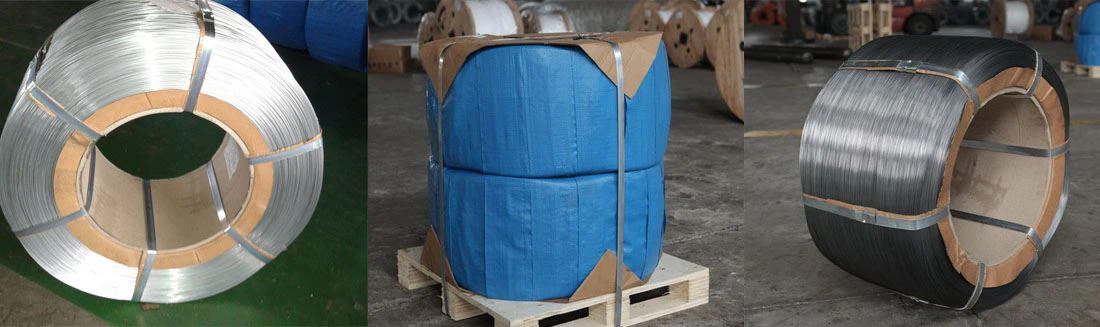
Core: The core is the central part of the wire rope, providing support and stability to the entire structure. It can be made from either fiber or steel, depending on the application's requirements. Fiber cores are lighter and more flexible, while steel cores offer greater strength and rigidity.
Wires: The wires are the individual strands that are twisted around the core. They are made from high-tensile steel and are arranged in layers, with each layer having a different number of wires. The number of wires and their arrangement determine the rope's overall strength, flexibility, and weight.
Strands: Strands of wire rope consist of two or more wires arranged and twisted in a specific arrangement. The individual strands are then laid in a helical pattern around the core of the rope.Strands made of larger diameter wires are more resistant to abrasion, while strands made of smaller diameter wires are more flexible.
Lubrication: Lubrication is applied to the wire rope to reduce friction and wear during use. It helps protect the rope from corrosion and extends its lifespan. Lubricants can be either oil-based or water-based, depending on the specific requirements of the application.
Terminal Fittings: Terminal fittings are the attachments at the ends of the wire rope, used to connect it to other components or machinery. These fittings can be eye splices, hooks, thimbles, or other types of connectors, depending on the intended use.
Steel wire - A kind of binding wire (tie wire), which includes a huge number of varieties that are widely used not only in manufacturing but also in everyday life. Steel wire for general purpose are made of mild steel with a diameter of 0.2-8.0 mm. Production is carried out using a method that is associated with repeated cold drawing. Steel wire of this quality is used in the manufacture of linking the rails and nails.
Barbed wire steel - This product circular with a diameter of 2.8 mm, which wore a specially selected pieces of wire of the same production, placed every 40 cm barbed steel wire supplied in coils, weight should not exceed 35 kg. Apply a wire in the construction of various obstacles and barriers. Often, use carbon steel wire.
Welding steel wire made from stainless steel or ordinary steel quality. Welding steel wire is produced with a diameter of 0.5-6.0 mm, which are delivered in bundles weighing no more than 80 kg. Welding steel wire is mainly used as a mechanized welding method, which provides a safe and clean weld.
Carbon steel wire is widely used in instrumentation for the production of consumer goods. Spring steel wire used in the manufacture of springs which wind around in the cold. The cable steel wire is used in the manufacturing process of various ropes, which are made from a specialized rod, which in turn guarantees non-plastic properties. It is also considered to be a very popular kind of steel wire for reinforcement of concrete products.
01
Wire Rope Construction
Wire rope is identified by its construction, or the number of strands per rope, and number of wires in each strand. For example, the construction 6x25 denotes a 6-strand rope, with each strand having 25 wires. Constructions having similar weights and breaking strengths are grouped into wire rope classifications, such as the 6x19 and 6x37 Classes.
02
Wire Rope Finish
The term bright refers to a wire rope manufactured with no protective coating or finish other than lubricant. Some applications do require more corrosion protection than lubricant can provide. In these instances, a galvanized finish is provided.
03
Wire Grade
Improved plow (IPS) steel is strong, tough, durable steel that combines great strength with high resistance to fatigue. Its minimum tensile strength varies from 223 to 258 ksi, depending upon wire diameter. Extra Improved Plow (EIP) steel has a minimum tensile strength that varies from 245 to 284 ksi, depending upon wire diameter. Extra Extra Improved Plow (EEIP) steel, is a grade used where a high breaking strength is required. This grade typically provides a breaking strength a minimum of 10% higher than (EIP) and is found primarily as a standard grade for specialized wire rope and often is available for standard wire ropes upon request.

Wire mesh is among the most prevalent materials for construction use. It is available in several different thicknesses, shapes, sizes, and strengths – ideal for any construction project. As the name suggests, a wire mesh sheet is made by welding wires of different thicknesses and lengths in a crisscross pattern forming a screen. Stainless steel is one of the most popular materials used to create wire mesh since it is resistant to corrosion and rust.
Steel wire mesh is a critical element for construction since it helps increase site efficiency, is easy to install, reduces costs, and offers quick erection time. While you can use wire mesh for several things, its primary functions include screening, sheltering, and structuring.
Concrete Reinforcement
A wire mesh sheet can help increase the overall strength of a concrete structure like a column, a slab, or a concrete roadway. There is no way of avoiding cracks in a concrete structure, but a wire mesh sheet can keep the materials together as they settle. They will act as a heavy-duty core and help strengthen the structural integrity of your concrete. While most professionals still use steel bars to help with concrete pouring, welded wire mesh offers an alternative that is more affordable, durable, and easy to install than reinforced steel bars.
Wire Mesh Can Act As A Barricade
Another way you can use wire mesh in a construction site is to secure the site’s perimeter. Surrounding the construction area using wire mesh as a barricade can help all workers stay safe and prevent people from wandering into the construction site. It helps keep citizens off the site and will also help you avoid any hazards, injuries, or construction accidents. It is an ideal fencing solution, thanks to its customizability and durability.
You can also use wire mesh sheets as barricades for heavy-duty equipment used in construction. This way, you can ensure all your expensive equipment is safe from theft and damage.
It Can Act As A Temporary Retaining Wall
Some projects require building a temporary retaining wall. Thanks to their economical nature, several contractors use wire mesh sheets to build welded wire walls and use them as retaining walls. The contractors do not need to hire labor or buy expensive equipment to install as the wire walls can be easily installed and removed when the wall is no longer needed.
It Can Also Be Used As A Storage Solution
Steel wire mesh sheets can also help you create substitute storage solutions for construction materials. You can use wire mesh as a divider when storing essential construction supplies. Several construction workers like to make wire mesh storage boxes to keep their protective equipment like construction hats, gloves, and safety vests. It also makes it convenient for workers to spot where they have kept supplies and equipment since wire mesh sheets are easy to see through.
Whether you work in telecommunications, electric utilities or another industry, using the right wire is vital. Your job has unique needs, and your materials need to meet them to provide safety and peak performance.
When choosing the correct wire for your application, you might consider galvanized steel and annealed steel. Knowing the advantages and disadvantages of each type can help you make an informed decision.
What Is Galvanized Wire?
To make galvanized wire, the manufacturer must put the wire through the hot-dip process. First, the manufacturer fabricates the steel wire to the specified gauge and thickness. Then, they must clean it in an acid bath to eliminate surface oxides. After rinsing and drying the wire, the manufacturer dips it into a bath of molten zinc, completely coating it in a thin layer of the metal. The manufacturer controls the zinc's thickness. A sequence of water cascades cools the wire and its coating.
Galvanized zinc coating provides some unique benefits.
Rust prevention: Does galvanized wire rust? Galvanized wire is highly resistant to rust because of the protective zinc coating that keeps moisture away from the steel beneath.
Damage resistance: A galvanized coating is solid and robust, protecting the wire from chipping, scratching and cutting.
Fire resistance: The zinc coating's melting point is exceptionally high, making galvanized wire resistant to melting in a fire.
Applications of Galvanized Wire
Galvanized steel wire is prevalent across industries and applications. The zinc coating makes galvanized wire useful in many instances where wet conditions or fire hazards make other types of wire unusable. Here are a few of the top applications of galvanized wire.
Fencing: Galvanized wire's rust and damage resistance is excellent for all kinds of fencing. Galvanized wire is also durable, holding up under high pressure. You can find galvanized wire fencing everywhere, from agriculture fencing to the Hexanet fencing used in insulating buildings.
Binding: Businesses frequently use galvanized wire to bind or bale construction and recycling materials into one unit. In construction applications, this wire makes it easier for construction teams to work with the materials on the job site. Many companies use galvanized wire to bind other scrap and raw materials.
Nails and staples: Construction teams need durable materials at every stage of the building process. The strength of these wires makes them ideal for providing buildings and homes with structural support. Galvanized steel wire creates sturdy nails, springs, staples and other structural elements that can withstand heavy strain.
Consumer goods: Manufacturers have found many uses for galvanized wire in consumer goods applications. From bucket handles to hanging support for artwork and mirrors, galvanized wire offers strength.
You'll likely see two different ways to measure the breaking strength of wire rope. Minimum breaking strength refers to the smallest load that will pull a piece of wire rope apart. Aggregate strength refers to the collective breaking strength of all of the wires in a single cable when a manufacturer tests them individually.
An overwhelming majority of suppliers define tensile failures a bit differently than users might. When suppliers run wire rope capacity tests, they consider the slightest problem to be a failure and thus will rate the rope for whatever value they found caused the issue. On a work site, technicians might not normally consider a small problem to constitute failure.
That being said, don't test your luck and don't overload your cables. Hardware vendors are cautious for a reason. You must always stay within the working load limit. It's easy to calculate wire rope capacity, so you'll never be without guidelines.
To calculate the Working Load Limit (WLL), divide the tensile strength by the design factor (typically 5, but determined the engineer designing the use of the wire rope).
The number you get is the maximum working load you can apply without risking tensile failure or metal fatigue. This value is often expressed in customary short tons, at least by engineers working in the United States.
You'll often see it expressed this way:
Ultimate Breaking Strength / 5 = WLL (Working Load Limit)
Consulting a Wire Rope Guide
While wire rope is noted for its high tensile strength, you don't want to continuously load a piece close to capacity. As a general rule, you shouldn't ever exceed the working load limit (WLL). This will eventually wear it out even if you're not exceeding any of the manufacturer's printed limitations. A simple wire rope strength chart can help you keep a close eye on wire rope strengths if find this to be an issue:
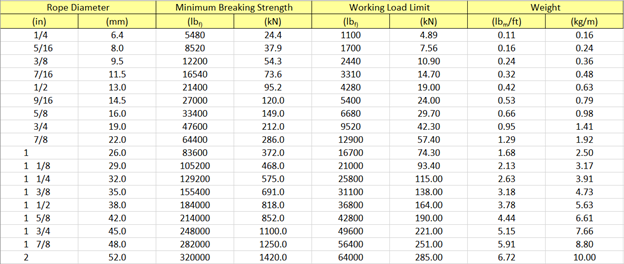
All ropes of the same size, grade and core offer somewhat similar minimum breaking force characteristics and weight per foot, though they do differ depending on the construction type and materials used. That makes a wire rope guide useful even if you only know the diameter of the aircraft cable you're working with.
Choosing the Right Wire Cable for Your Job Site
Wire rope is a complex piece of device. Few people ever stop to consider how each piece of wire rope is a machine unto itself. Remember to think about how strong and flexible you need your new cable to be and consider whether it'll get exposed to harsh conditions or have to weather the elements. You'll be rewarded by your research with a piece of cable that works as hard as you do.
Tianjin Huayuan Times Metal Products Co., Ltd is established in 2008 is a professional manufacturer in China, engaging in the research, development, production, sale and service of kinds of wire products. The factory is one of the thirteen branches of Tianjin Huayuan Industry Company. Locating in Jinghai, Tianjin with convenient transportation access to Xingang, Tianjin Port, Shi Jiazhuang and Beijing, Tianjin Huayuan Times Metal Products Co., Lt is the resource of the whole steel market in North Part of China.


Tianjin Huayuan Times Metal Products Co., Ltd. is one of the most professional steel wire for construction manufacturers and suppliers in China, specialized in providing high quality customized service. We warmly welcome you to wholesale high-grade steel wire for construction in stock here from our factory. Contact us for free sample.
ZNAL Nail Wire, Galvanized Spring Steel Wire, Steel Wire for Construction(0/10)